Vol. I · MMXXVI · Issue 250
Bread.
Circuses.
And the lawn.
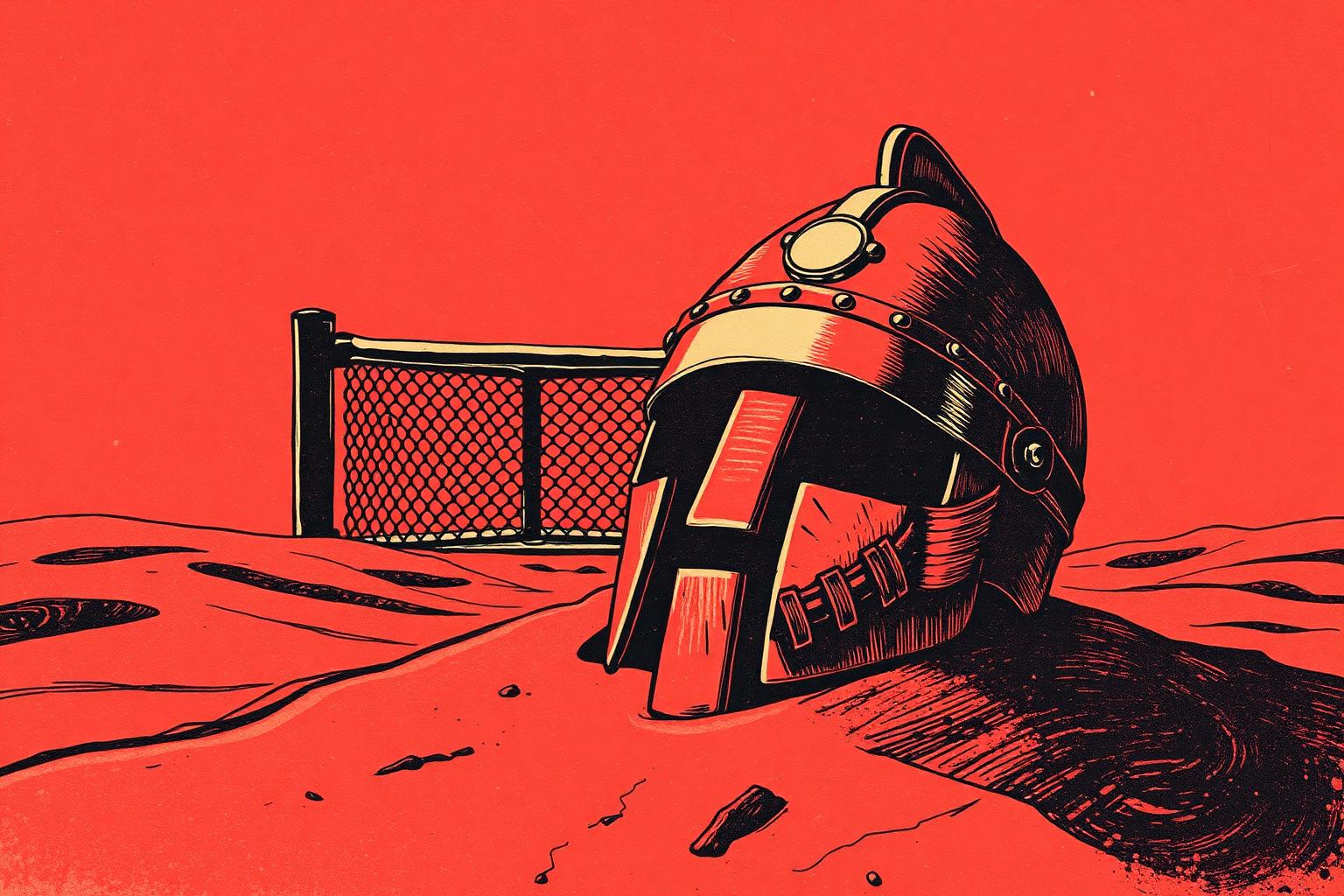
In a few months the United States will turn two hundred and fifty. To mark the occasion, a steel cage will be built on the South Lawn of the White House and two men will be paid to hurt each other in front of a President.
Rome did this too. This is a study of what it meant then, what it means now, and which version of the story will outlive both.
c. 264 BCE
First recorded munera in Rome — funeral games for the dead.
80 CE
The Colosseum opens. 100 days of inaugural games.
476 CE
Western Empire falls — roughly 250 years after its imperial peak.
2026 CE
United States, year 250. A UFC fight is scheduled on the White House lawn.
The system
Three ways into one question.
Read in order, or pick the depth that suits the hour you have.
Graphic Novel
≈ 7 min
The Sand and the Lawn
Six panels. Ink and red wash. The core idea, told to the eye before it is told to the mind.
Enter →Encyclopedia
≈ 18 min
Gladiatorial games & the lives of empires
A structured entry — origins, mechanics, decline, modern echoes — for the reader who wants the lay of the land.
Enter →Peer-Reviewed Paper
≈ 35 min
Performing Collapse: Spectacle as Sovereign Theatre, Rome → US
Footnoted, cited, formal. A theatre-historical argument about whose stories survive an empire's twilight.
Enter →The questions, repeated
"How does this reflect on our society? What similarities and differences do we see, and why? What stories remain, what stories get told, and, in this time period, disappear?"
— The standing brief of this study